
Parental leave
2 April, 2026
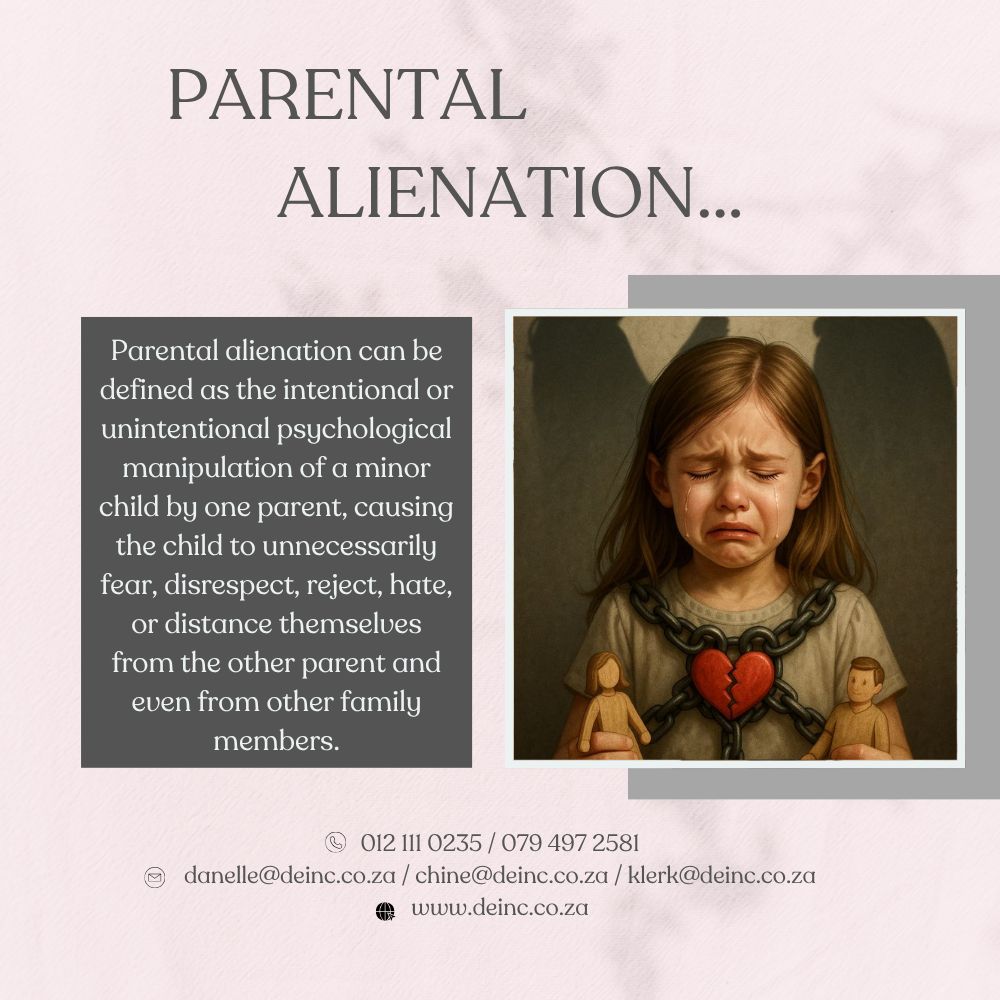
Parental Alienation in a Nutshell
5 May, 2026 Divorce is one of the most significant legal and personal transitions a person can face. When financial constraints make it difficult to appoint an attorney, many individuals turn to settlement negotiations as a quicker and more affordable option. While settlement can be effective, it also carries real risks if you do not fully understand your legal rights.
As a family law practitioner, I often see individuals who entered into settlements without proper advice, only to later realise that the agreement unfairly benefits one party. By then, correcting the situation is complex, costly, and sometimes impossible.
Here’s what you need to know before entering into any divorce settlement.
-
Understand Your Marital Regime
Your marital regime forms the foundation of your financial rights and obligations upon divorce. In South African law, marriages generally fall into three categories:
- In community of property
- Out of community of property without accrual
- Out of community of property with accrual
Each regime has different consequences for how assets and liabilities are divided.
For example, under the Matrimonial Property Act 88 of 1984, the accrual system allows a spouse to share in the growth of the other spouse’s estate during the marriage. Misunderstanding this can result in forfeiting substantial financial claims.
* Before negotiating, ensure you fully understand what you are legally entitled to claim. (Please refer to our webpage or more information on marital regimes.)
-
Minor Children – The Paramount Consideration
Where minor children are involved, their best interests are paramount.
This principle is entrenched in Section 28(2) of the Constitution of the Republic of South Africa, 1996 and further elaborated in the Children’s Act 38 of 2005.
When negotiating a settlement, you must carefully consider:
- Primary residence (where the child will live)
- Contact arrangements with the non-resident parent
- Decision-making responsibilities (education, healthcare, religion)
- Maintenance requirements
- Holiday arrangements and special occasions (e.g. Mother’s Day, Father’s Day)
Importantly, there is no “one-size-fits-all” contact regime in South Africa.
Courts apply Section 7 of the Children’s Act, which sets out factors such as:
- The child’s age, maturity, and needs
- The relationship between the child and each parent
- The capacity of each parent to provide for the child
- The need for stability
* Case law reference: In McCall v McCall 1994 (3) SA 201 (C), the court outlined key factors to determine what is in a child’s best interests—principles still widely applied today.
-
Spousal Maintenance – Know Your Rights
Spousal maintenance is not automatic. It depends on various factors and is governed by the Divorce Act 70 of 1979.
There are generally two types:
- Rehabilitative maintenance – temporary support to allow a spouse to become self-supporting
- Permanent maintenance – ongoing support (less common and fact-specific)
Courts consider factors such as:
- Each party’s financial means
- Earning capacity
- Age and health
- Duration of the marriage
- Standard of living during the marriage
It is further worthy to know that a spouse can only seek spousal maintenance once during the Divorce, if a spouse failed to seek spousal maintenance, one cannot seek same post divorce.
* Key constitutional development: The landmark case of EB v ER 2022 (1) SA 509 (SCA) reaffirmed that lifelong maintenance is not a given and emphasised fairness, self-sufficiency, and evolving societal norms.
A critical takeaway from EB v ER is that:
The court is not strictly bound by the financial consequences of the marital regime when determining maintenance.
Instead, the court may look beyond the contractual framework of the marriage and consider broader factors, including:
- The actual financial positions of the parties at divorce
- Their respective earning capacities
- Whether one spouse has become financially dependent during the marriage
- The lifestyle enjoyed during the marriage
- The prospects of self-sufficiency
This means that even if a spouse receives a substantial patrimonial benefit (for example, through accrual), this does not automatically exclude or guarantee a maintenance claim.
* Another important case: Wijker v Wijker 1993 (4) SA 720 (A) deals with forfeiture of benefits and highlights how courts assess fairness in financial outcomes.
-
Your Patrimonial Claim
Your patrimonial claim relates to how assets and liabilities are divided.
This includes:
- Immovable property
- Investments
- Pension interests (often overlooked but highly significant)
- Business interests
- Debt allocation
For example, pension interests are specifically dealt with in terms of the Divorce Act, and failure to properly include these in a settlement can result in serious financial prejudice.
* Important case: GN v JN 2017 (1) SA 342 (SCA) clarified aspects relating to pension interest and its treatment in divorce proceedings.
-
The Danger of Settling Without Advice
Many individuals rush into settlement because they:
- Cannot afford legal fees
- Want to finalise the divorce quickly
- Feel pressured by their spouse
This is where serious mistakes happen.
Once a settlement agreement is made an order of court, it becomes binding and enforceable. Attempting to vary or rescind such an agreement is legally difficult and requires strong grounds, such as fraud, duress, or material non-disclosure.
* Legal principle: Courts are generally reluctant to interfere with agreements freely entered into between parties.
-
Mediation vs Joint Attorney Consultations
If you cannot afford an attorney, be cautious about consulting an attorney together with your spouse. That attorney cannot represent both parties’ interests fully.
Instead, consider using a neutral, accredited mediator who:
- Acts impartially
- Assists both parties in reaching a fair agreement
- Ensures informed decision-making
However, even in mediation, it is advisable to obtain independent legal advice before signing any agreement.
Final Thoughts
A settlement agreement can be a powerful tool—but only if entered into with full knowledge of your rights.
Far too often, individuals save money upfront, only to face significant legal costs later trying to undo an unfair agreement.
Do not trade long-term financial security for short-term convenience.
Need Advice?
If you are unsure about your rights in a pending divorce or need guidance before entering into settlement negotiations, feel free to contact our offices. Early advice can make all the difference.